spey days 3-6-2010 on the mo

Sign-ups at Big R Fly Shop
Presented by: Bruce Berry, Beulah Fly Rods/ The Staff at Big R Fly Shop
WHY SPEY: Spey fishing is an effective and fun way to present flies to anadromous as well as fresh water species. Spey fishing will benefit any angler in the ability to keep your fly on the water effectively increasing fishing time and potential hook ups! Spey techniques will benefit anglers in the ability to fish short, medium and long distance presentations on pieces of water that feature scarce back-casting room. Spey fishing is also a directly transferable skill to almost all single hand fishing situations!
GOALS: Today, I will introduce spey fishing techniques and challenges! The main goal for the day is to learn casts from both sides of the river. Effectively, this will allow any angler to spey fish both banks of a system with any prevailing wind or obstacle. There are both air-born and water-born casts in spey fishing. We will be working with air-born and water-born casts including the Switch, Double Spey and Snap “C”. At the end of the day we should have a basic understanding of these casts and be able to perform them off both left and right shoulders.
SWITCH CAST: Popularized by Simon Gawesworth as a teaching tool. This cast will be utilized during our class to understand rod path, timing, when and how much power to apply, and allow all involved a fundamental understanding of how the two handed rod works. Though not a useful “fishing” cast, knowing the Switch cast proficiently is akin to receiving a key that will unlock all other useful “fishing” cast’.
DOUBLE SPEY: This cast is best performed from river right (river current moving from the anglers’ left to right shoulder) for a right hand caster. River left for a left handed caster. This will be explained and demonstrated, then performed by each participant. Pitfalls: Aggressive upstream wind, obstacles making any type of back-cast (D-Loop) impossible.
SNAP “C”: This cast is best performed from river left (river current moving from the anglers’ right shoulder) for a right hand caster. River right for a left handed caster. Pitfalls: Heavy wind both upstream and downstream may present problems, and obstacles making any type of back-cast or D-Loop impossible.
Both Double Spey and the Snap “C” may be performed from the angler’s off shoulder which will also be explained and demonstrated, then practiced by all in the day’s group.
SPEY DAY:
~We will start by getting a feel for the two-handed rods and going through a quick “Switch Cast”. This will familiarize the anglers with the general feel of rods from 10’6” to 13’6”. This exercise will teach rod path, timing, and forward delivery.
~Depending on the class majority as right or left hand dominant casters, we will move into the Snap “C” from River left.
~Move to the Double Spey from river right.
~Go to the Snap “C” off shoulder followed by the Double Spey off Shoulder.
Congratulations: You can now effectively fish spey techniques from both sides of any given river with most any prevailing obstacle. Now, with a little practice on your own to set these techniques to muscle memory you will be ready to tackle splash and go casts and start making enjoyable and memorable trips with a two-handed spey rod.
To maximize our time on the water I will provide matched Beulah spey rod and Elixir line systems in a multitude of length and line weight options. We will gladly field any questions concerning the correct equipment and matched systems for you at the conclusion of our day on the water.
What You Should Expect:
~You should expect to start early as local waters crowd quickly on most warm days late spring through summer.
~Anglers should come fully prepared with waders, boots, wading staff if applicable, hat, sunglasses (always worn spey fishing for safety), and sunscreen. Again, there will be a full armada of two-handed rods for class participants completed with matched spey lines and reels to use during our session.
~Come ready to go with coffee in you and whatever else you need to get the day started off on the right foot. This is a fairly intense course that will feature 3-31/2 hour session in the morning, a lunch break with lunch provided by yours truly, followed by a couple more hours of casting after lunch.
~All Spey participants will cast yarn as your fly throughout the day. This will keep folks from fishing their casts through, paying attention to the task at hand which is effective delivery techniques. Yarn also adds an element of safety for those starting out on their spey journey.
~At the end of the day feel free to stay back for a question and answer session. I will be happy to work with and trouble-shoot folks individually, talk about fishing presentations once the cast is delivered pertaining to different water types, different line types or rod/ line combinations, etc.
~Cost:
The Cost of the Spey Day will be $90.00 which includes provided rod/reel combinations for the day, lunch, refreshments and casting instruction. Classes are limited to six-eight anglers maximum. Coordinating classes that meets everyone’s busy schedules can be tough. If you are interested, feel free to sign up and remit payment as class dates will schedule accordingly.
Happy Fishing from Bruce Berry
503.807.3221 mainstreamod@yahoo.com

a fly rod review

I just broke through the clouds in one of the prop planes that fly from Great Falls, Montana to Seattle.  I’ve only had 2 cups of coffee at this point, pre-8am, and thinking about fly rods keeps prop plane turbulence out of mind.  Picked up a couple of publications with the latest fly rod reviews, read ‘em, in my opinion they were terribly biased.  So here is mine, yes they are biased, but not because I got payed to say anything particular about any rod or company.  They are biased because of who I know is behind the rods, what I know about the companies, and because I have fished them all.  I’m not going to comment on a rod I haven’t fished against a comparable rod in this review, and I will say negative things about a rod that I don’t think is up to par, regardless of the company behind it or the marketing that has been spent to make it “cool.”

I am going to break the categories in to switch rods, saltwater rods, fast action trout rods, and general trout rods.  I feel pretty comfortable speaking educated on these categories of rods.  You are probably going to notice that almost all of the rods that we review here are in our fly shop… well that’s because we decide what rods we sell and we can sell which ever rods we want to.  So naturally we have the rods we think are the best to sell.

General Trout Sticks:  This is a difficult choice.  The first decision that cuts your choices in half is whether or not you are going to buy an American made rod, or if you are okay with an import.  At our shop we carry both.  I honestly feel that the American made rods have a much more hand crafted look and feel but they should, they are at least twice as much money.  Off shore rods have come a long way.  Echo, Temple Fork and others are making rods off shore that are very good fishing tools for the money.  From $99 and up.  Some rods, like the St. Croix Imperial have moved their production to Mexico, to at least have their lower price point rods made in North America. 

Skill levels make a difference in choosing a trout rod.  A beginning caster should not consider a really fast rod to learn on or it will be difficult for them to learn to properly cast because they will never understand how to load the rod.  I even have found myself going to more medium action rods for trout because I have very little need to cast long distance (past 50-60 feet), and I have more feel and mending capabilities.

One other little marketing gimic I’d like to clear the air with is about graphite or carbon fiber that is used in the rods.  Please don’t be fooled in thinking that one of these little tiny fly rod companies is getting any  type of space age carbon fiber from NASA to build their fly rods with.  They aren’t.   They are all buying from one or two places in the world and it is the same stuff.  There are some different formulas in the scrim but the carbon fiber is all the same in higher end fly rods.

Taking all of these variables in to perspective I have a favorite trout rod, a favorite value rod, and the “Trout Bum Award.”

My favorite trout rod is the Scott G2 9 foot 5 weight.  This rod has that artistic trout lover appeal, almost a boutique style hand crafted look, and cast like a dream.  I think the internal ferrule design is rad, with no bulkiness at the ferrule, which is different than a sleeve over ferrule that most rods use.  The rod feels light in the hand, and still has an incredibly amount of power and fish handling skill.  That is a major reason I like this rod over the Orvis Helios or other ultralights; yes some of those rods are light but when you cast out past 50 feet or in to the wind they are gutless.  You know that sweet Z-axis technology that Sage marketed so hard the last couple years; the one where the scrim is zig zagged, Scott came out with that in the 1980’s.  Yes, basic engineering has told us that triangles are stronger than lines, thanks for the update but I guess it is true “Z-axis” does sound cool.    Another thing I think is cool on the g2 is that you can actually see the rod wraps and the craft that went in to building each one, they are not high glossed, painted up rods, they are truly hand-made fly rods from Colorado.  One last thing I like about the g2; not everyone has one, it is an under the radar, cool rod to own, while you buddies are bragging up their sticks out on the water, I’d rather just out-fish them.

A runner up to my favorite trout fly rod and KK’s favorite rod is the Winston BIIX, KK likes it in a long 10’ 4 or 5 weight but that is extreme for some of us, and I think it is pretty gnarly in a simple 9 foot 5 weight.  For one, this rod is Made in Montana which is just cool, no way around it, that is cool.  KK is also Made in Montana, which makes me think is part of the reason for his attachment to the green rods.  Even Erik is throwing a green rod from time to time now.  This rod has a lot of feel and a dream to throw dry flies with.  I don’t personally feel it has the power/light crisp feel that the g2 has but that is not the feel everyone is looking for either.  This is my second choice in a higher end trout rod.

The G2 and the Winston BIIX are priced at $675-695, and come with a lifetime warranty.

Best Value: 

In my opinion, without a doubt and I casted them all and fished with most of them, the new St. Croix Imperial is the best value in value priced rod at $170.  Regardless of your opinion of St. Croix rods in the past, yes, they used to be heavy and clunky but not anymore.  Even if you have an old Imperial, don’t judge.  I wish so bad St. Croix wouldn’t have used the Imperial name for this rod because it doesn’t even compare to the old Imperial rods from St. Croix.  These rods are light, feel great, have a fairly quick action for this price point and I can’t hardly say anything bad about them.  I can say they trump what Echo and Temple Fork have to offer at this price point, or any other company I have fished.  The rods come in 4-piece with a rod tube.  If this is your price range, this is a no brainer decision if you ask us.

Trout Bum Award:

I have to go back to Scott, and I can reasonably justify this.  The Scott A3.  Here’s why:  If you are a trout bum you care about where the rod is made and who is behind the creation of your rod…probably.  Scott fly rods designers fish … a ton.  Secondly, the rod is made in the Colorado just like the other Scott’s.  thirdly, If you are seriously a trout bum you probably are a bit of cheap skate like me, and you probably don’t have a lot of money due to money spent on getting to where you want to fish, and getting the time to fish.  The Scott A3 is a great medium fast rod, that can cover almost all situations for trout in a 9 foot 5 weight or 6 weight, looks cool, has a lifetime warranty and is priced at half of the higher end Scotts at about $300.  The Scott A3 in an evolution of the A2, and this is not just lipstick on a pig.  The A3 generation was built on an entire new set of mandrels, the components are almost all upgraded, and they are pretty durable rods as well…I know how I treat my rods…not like should.

Just Getting Started:

I’m not going to choose a favorite here because it depends on what your budget is, and these rods are all capable of getting a beginner casting properly without too much frustration. 

Here’s what we recommend:

Redington Minnow package:  This rod combo package is tailored for the youth with a smaller grip.  It cast great, looks great, the reel isn’t garbage like a lot of starter packages and we have them starting in the $59 range this year in the shop. 

Scientific Angler Combo:  I can’t tell you the number of people who learned on this basic rod.  All I can say is that it is a great basic rod and reel package to decide if you are going to get in to it.  It is capable of handling anything for trout here in Montana.  It comes with rod, reel, and line for about $99.

Ross combo:  The Ross combo is your first combo that is for beginners that comes with a lifetime warranty.  Ross is known for their reels and gaining a lot of ground with their rods, wining a lot of value based awards in the last two years.  This combo come in at $149 and is an excellent first choice, it also comes with line.

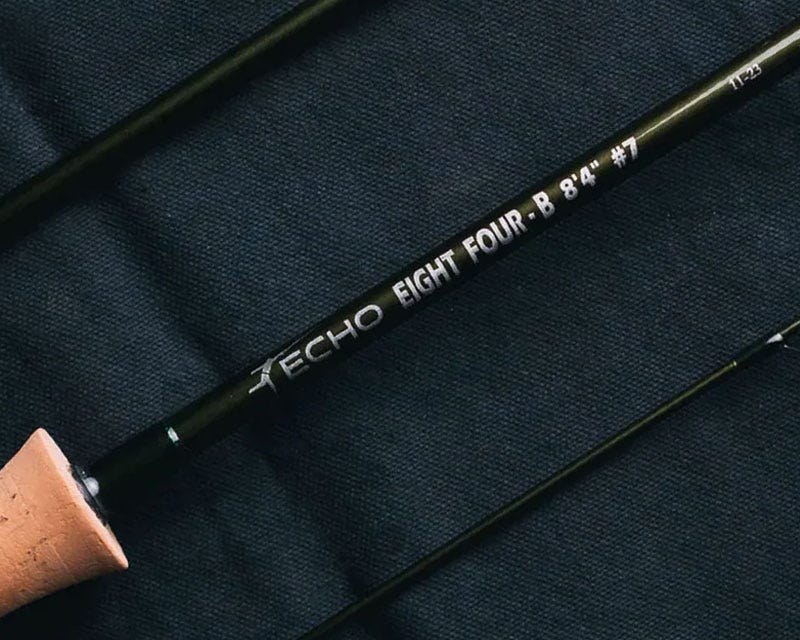
Echo Solo:  This is the best deal in a $99 price point 5 or 6 weight. Lifetime warranty and fishes well.  They come in 3 piece only and come with a rod tube and sock.  Can’t beat this deal at $99 for what you are getting.  Just compare the competition’s 2 piece rod with no rod tube and you will see what we are getting at here.

St. Croix got a new one that we just got in the shop that retails at $119 and I haven’t fished yet… but will let you know.

More to come…

gf fly fish film fest

The Great Falls Film Festival is looking sweet for this year.  So far we have confirmed booth attendence from Yellowdog Fly Fishing, Scott Fly Rods, Winston Fly Rods, Water Master Boats, Scientific Angler, Rio Fly Lines, Ross Reels, Kaenon Shades, Fishpond, St. Croix, William Joseph, Yellowstone School of Fly-fishing, and many more showing off new products, throwing some free gear in the crowd, and raffle prizes.  Mark Ozog is busy screening all the films we have received recently, they always wait until the last minute to get them in to us.  We also have a beverage area this year slightly away from the main event so the films will be heard easily and you can still get your beverages to enjoy on a Friday night. 

I am excited to see this event to continue to grow.  This is a true fly fishing film fest.  The MRF is a completely non-profit group who is hosting the event.  There is no one making money off of this film festival, all proceeds will go to the trout and the sport of fly-fishing.

Buy your tickets.

More information available at www.fishfilmfest.com

new january newsletter

Read the January Big R Fly Shop Newsletter.  Pay special attention to the Film Fest and new Contest we are going to have each month.  Win some free gear!

Click the Pic!

mikey weir’s new video…

I think this might be Mikey’s coolest video so far… shows off our lifestyle pretty well.

Green Rush from Mikey Wier on Vimeo.

pam?

Frozen rod guides are the most annoying issue on God’s blue water when fish are eating on the Mo in cool weather.  I’ve heard of a bunch of ideas to slow the pain of glacial rod guides.  These include petroleum jelly, Loon’s Ice off Paste, and now Mitch thinks Pam’s a good idea.

Pam…does not sound like a good idea.  Mitch has lots of ideas that I question.  However, I am willing to try his Pam trick today, and will report later.  In the mean time, here’s a little story about Mitch…

Day 1 Baja:  Mitch came along on our Baja trip to try to land Roosters from the beach’s off the Sea of Cortez (we were successful) like a lot of people have in recent years.  We flew in to Cabo and got this crazy taxista who was telling us all about how he just got out of jail, he didn’t have a lisence, and he couldn’t drop us off at the front of the lodge because he would get in trouble for taking money for his service…wow.  We finally got close to our fly fishing lodge where we would be for the week which was just outside of Los Barilles and La Riviera.  Upon seeing the bay, Mitch yelled out, “Wow guys!  Look at all the sailboats!” in a very loud and excited tone.  Everyone on the trip, including our taxista stopped and turned to look at all the boats.  No boats.  There were no sail boats, no yachts, no kayaks, nothing on the water…not even waves.  We all turn and look at Mitch puzzled and he responded, “I thought I saw a bunch of sailboats.”  ??? 

Yep…that’s our boy Mitch.

Chinook winds are making it feel warmer today. We are going fishing on the Mo. Cornfed is getting the boat ready. Fishing report will follow.

south andros casting lesson

Here is some technical casting advise from the Bahamas.

new thisisfly.com magazine out now


Click on the image.

thingamabobber pro-staff

Have you seen this official thingamabobber pro-staffer tattoed anywhere yet?  Don’t even think about copying this sticker…it’s mine!  (and you can see it is copyrighted right on the bobba).  If you get the sticker, no matter how you get it, you’re in.   That’s right, love ‘em or hate ‘em if you are a nymph fishing fool, or a guide you have spent time crosseyed and glazed over waiting for your thingamabobber to bob.  Great nymph fisherman are skilled enough to not have to purchase these things…that’s not me.  I need a bright floaty ball to warn me of strikes, and I’m proud of it. 

Old School:  “Strike Indicator” and you get your hand slapped for calling it a bobber.  This is still true if you take a spin fisherman out and they call it a “bobber” with out realizing it should be called a “strike indicator” to avoid the association with conventional tackle.

New School:  “Bobber” is allowed if it is obvious that the person saying it knows that it is really a “strike indicator” but since the word “bobber” is so retro and against the norm to say…it’s cool.

The new cool strike indicator trend = Black Thingamabobbers (fish can’t see them as well and they contrast well against the glare of the sun).  Pro-staffers know this.

I am a thingamabobber pro-staff.  I got the sticker.

the steelhead watcher

I originally read this article from a post at Rogueangels.net

This article is from North Umpqua Foundation.

“Lee Spencer is a volunteer at the Big Bend Pool. He spends hours, days, weeks and months guarding the pool from poachers, watching fish behavior and contemplating nature and how humans affect the environment. These journal pages reflect Lee’s thoughts on the fish, the river and how our efforts at protection could be improved.
To read some of his diary entries, click here
Steamboat Creek is the main steelhead spawning tributary of the North Umpqua. Fish that spawn in Steamboat account for 30 to 35 percent of the approximately 2,500 wild fish that have returned to the North Umpqua system in recent years. Before the fall rains arrive that enable the fish to return to the upper reaches of the creek to spawn, the fish hold in large pools ­ especially the Bend Creek pool, 11 miles up Steamboat Creek Road.
In the past, these fish have been extremely vulnerable to poachers. An act of vandalism on such a pool (like some hooligan throwing a stick of dynamite, which has happened in the past) could devastate the North Umpqua wild steelhead population. Fortunately, the fish have a protector in Lee Spencer. Lee has been retained as part of TNUF´s FishWatch Program.
Lee lives in a trailer by the river. When he´s not discouraging potential poachers, he´s educating visitors on the lifecycle of steelhead, and the significance of anadramous fish to the larger ecosystem.
During the summer months, Lee says he´s averaged 15 to 20 guests a day. Many are anglers up from the North Umpqua, though some are just curious passer byers. “Most visitors have a remarkable reaction to the fish,” Spencer has observed. “The most common comment I hear is ‘Thank you for watching our fish.’”
Lee’s connection to the North Umpqua goes back to 1972. “I took some time off from college and hitchhiked along the river. I though it was the most beautiful river I´d ever seen. I discovered fly fishing for steelhead shortly thereafter.” After eventually taking a graduate degree in Anthropology from the University of Oregon, and working a number of different jobs, Lee began his fish watching vocation as a volunteer five years ago. Three years ago, it became a full-time endeavor, mid-May through December. “I´ve always had an interest in natural history,” Lee shared. “If you have a pre-disposition toward this sort of thing, the opportunity to be here is ideal. The things going on in the pool are far more complex than I ever expected.”
To help raise funds to pay Lee´s modest stipend, the North Umpqua Foundation has created a handsome poster of one of the holding pools on Steamboat Creek. For information on how you can help preserve this wonderful river please email us or write to:The North Umpqua FoundationP.O. Box 238Idleyld Park, OR 97447-0238″